Fabien Vallérian and Ruinart
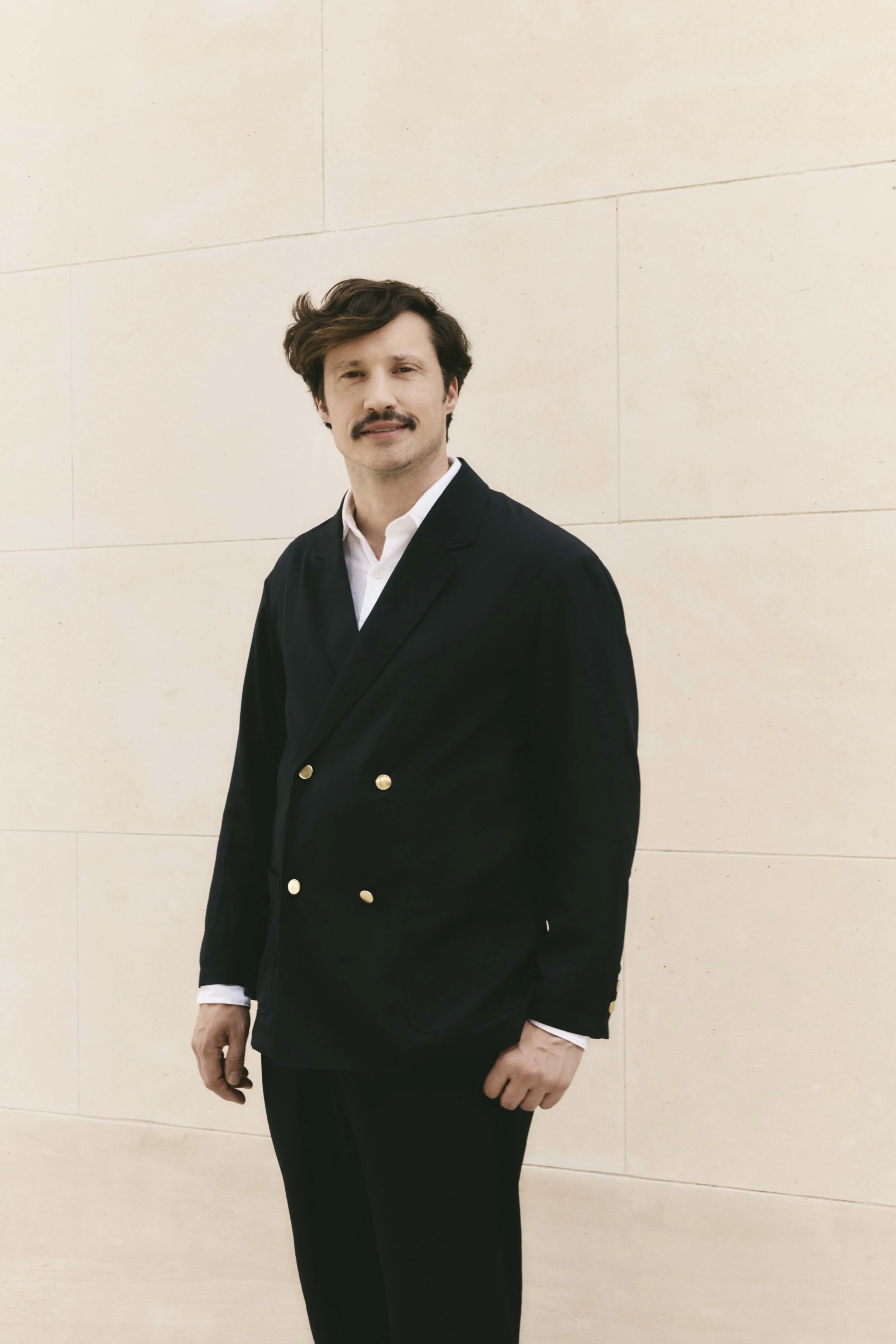
Ruinart, Fabien Vallerian. Photo and copyright of Alice Jacquemin.
A graduate of Sciences Po Paris and HEC Paris, Fabien Vallérian began his career in 2008 in marketing at Baccarat crystal, where he worked hand in hand with numerous designers and artists. Then in 2016 he was called to become Marketing and Commercial Director of the Manufacture Nationale de Sèvres, establishing a bridge between a unique know-how and contemporary creation. Passionate about contemporary art and design, he joined Maison Ruinart in February 2018 to direct international communications. Today, as International Arts and Culture Director of Ruinart, he works to promote the many links between Ruinart and the art world: commissions to artists, partnerships with fairs, museums and galleries, public relations as well as various Ruinart art prizes around the world.
LUCIJA ŠUTEJ: Ruinart’s relationship with the arts dates back to Andre Ruinart commissioning in 1896 Alphonse Mucha’s to develop posters. How has this collaboration set the direction for future collaborations that guide the commissions at 4 Rue de Crayères?
FABIEN VALLERIAN: Since the 19th century, the Ruinart family were very interested in art and avid collectors. From commissioning portraits of the family members, they were also giving artistic education to their children. There were painters actively teaching the children to draw and paint, while musicians provided music lessons. So, they had all this connection towards the arts and we know through our archives that they were collectors of pieces from antiquity, bronze sculptures from the Renaissance and had a varied coin collection, to just illustrate some interests.
Andre Ruinart was a direct descendant from the founder, Nicolas Ruinart. On one occasion, he saw a poster of actress Sarah Bernhardt by artist Alphonse Mucha in Paris, and he found it so fascinating that he met with the author and asked him to create the painting that would become the first advertising for Ruinart champagne. It was very innovative, because it was the first advertising and the first commission to an artist by a brand. An originality in terms of a brand positioning and image - how to build a brand and to tell the story visually of the mission.
So this artistic connection, it really set the tone for the future, as Ruinart was always all about innovation and about connecting to the contemporary creation of specific time. At the time of the first poster, such a commission was considered very new and modern. It was not the traditional classical style that was then present. Ruinart essentially took the risk to commission an innovative artist and this principle remains for us an inspiration to commission contemporary artists today. We invite artists to come for art residency and to create on our grounds.
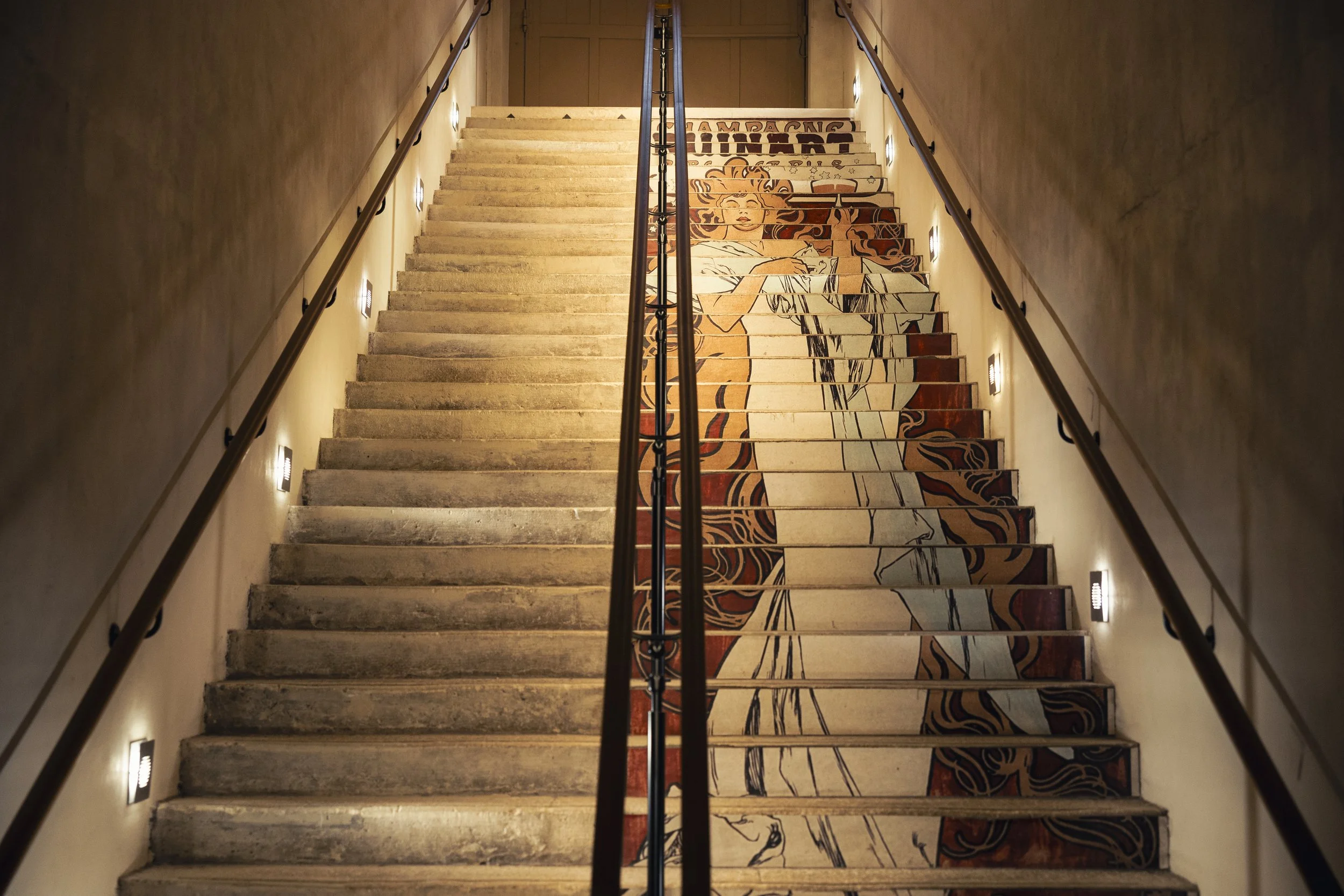
Ruinart, 4 Rue de Crayères, Poster by Alphonse Mucha. Photo and copyright: Mathieu Bonnevie. Image courtesy Ruinart.
LŠ: You mentioned that artists were always at the centre of Ruinart. Which galleries and artists do you see as central in the first decades since the first commission of Ruinart?
FV: Andre Ruinart knew about Impressionists and those years were also the start of Art Nouveau. It was a very exciting time in Paris, because the city was really clearly the center of the art world, with painters from different countries (from Great Britain, USA to Japan) coming to the French capital to study and exhibit. Salons played a vital role as the place to host exhibitions of the new kinds of paintings.
And in more recent times, from 2008, our commissions at Ruinart have been quite diverse. There were designers and artists. So it was a mix, and there was and is a desire to try different things. For example, London-based Israeli artist Gideon Rubin, created portraits of many of the people that were important in the history of Ruinart, from the 18th century onwards.
LŠ: The new Pavillon at 4 Rue de Crayères was designed by Sou Fujimoto and it effectively transformed the visitor entrance and the overall experience. How does this pavilion set the tone for the dialogue between architecture, art, and nature?
FV: For us, the first dialogue that was established with this new pavilion is a dialogue between the past and the future, between tradition and modernity, because it's effectively facing the historical buildings. So it's in the direct symmetry of the courtyard. Our historical courtyard is in the shape of a U, and the pavilion brings so much modernity and a light touch of asymmetry (roof) within the organization of the space.
The pavilion reflects our vision of innovation and creativity. When Ruinart decided to work with the Japanese architect, Sou Fujimoto, the idea was really to create something that could stand the test of time. We didn't want to work with an architect that would maybe create something very fashionable now, which would turn out outdated in 15- 20 years. Timeless and sustainable was our approach and Fujimoto’s sense of purity, subtlety, play with geometry and shade were incredible. The shade that travels on the glass façade, and local stones is unmissable.
Ultimately, our desire was that people would feel welcome. As the pavilion is the cultural and visitor center, it is a place of lived experience. To taste champagne, have lunch, and to discover art. The building and the sculpture garden are free and open throughout the week. We want to connect with the outside world, to make them experience the Ruinart’s art de vivre lifestyle.
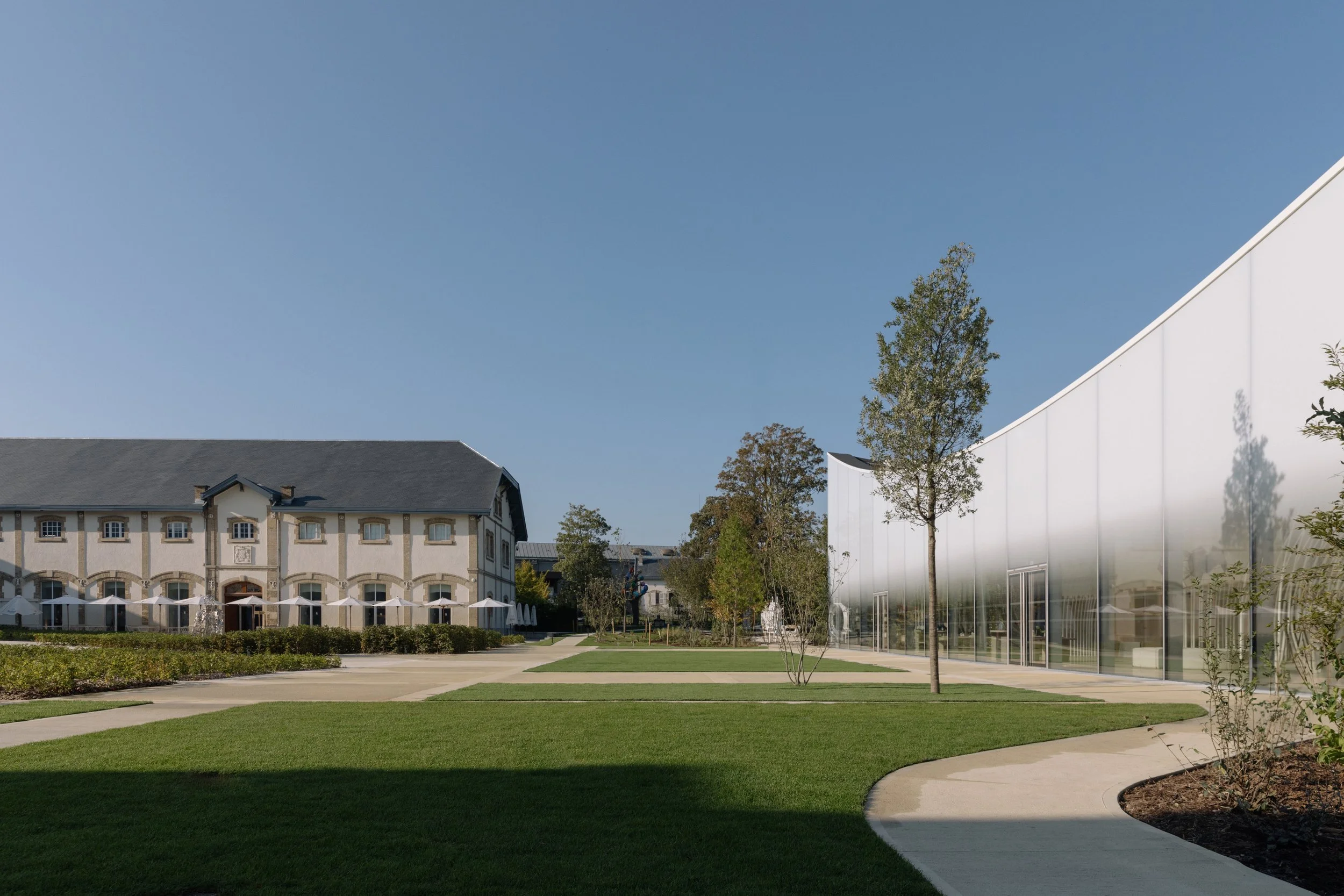
4 Rue de Crayères, pavillon Nicolas Ruinart. Photo and copyright: Raul Cabrera. Image courtesy Ruinart.
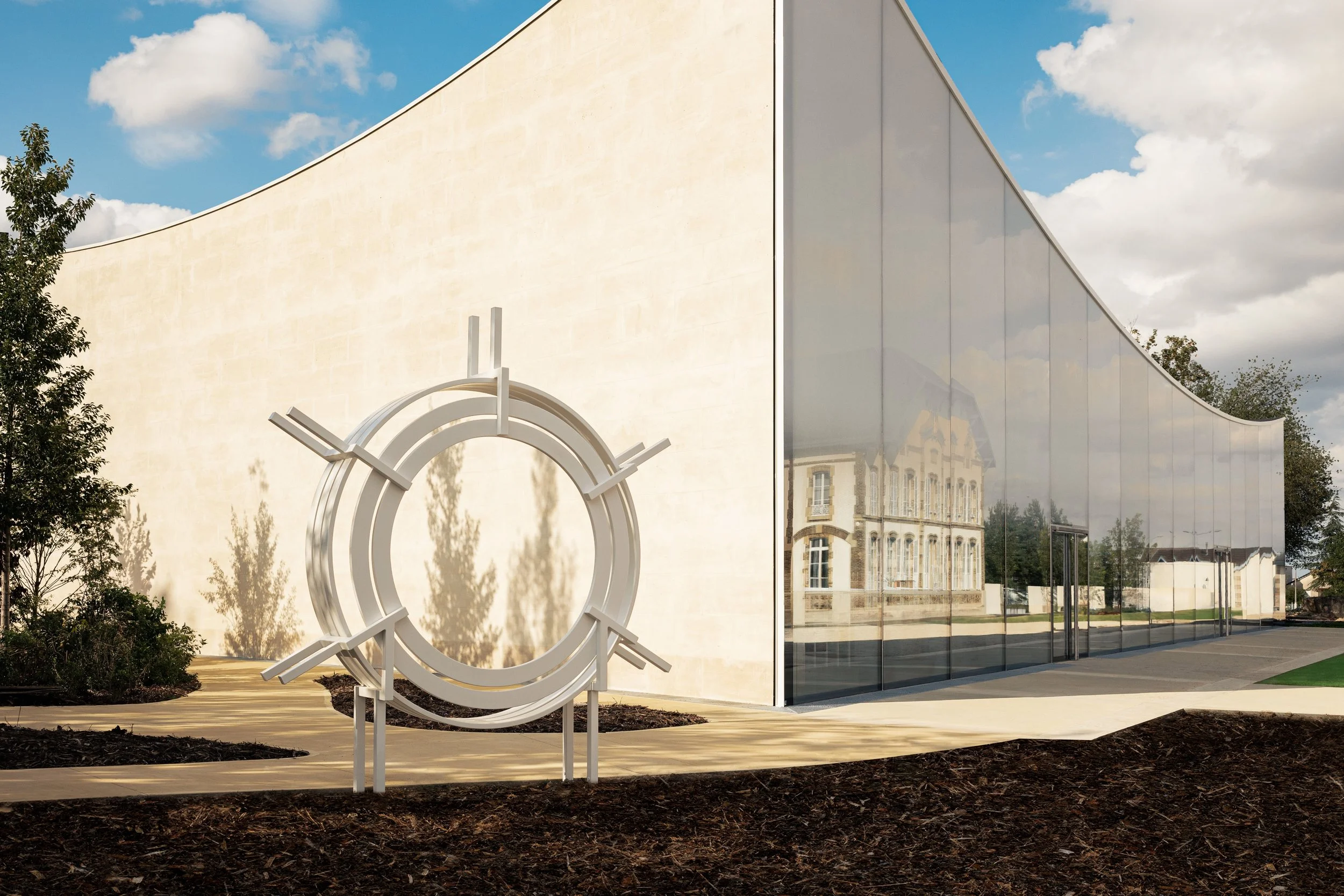
Pavillon Nicolas Ruinart. Image courtesy Ruinart.
LŠ: Are you planning any other architectural interventions?
FV: We have projects which are not yet revealed. A second phase for the pavilion idea, and all I can say is that it will be different.
LŠ: In 2008, Ruinart launched the Carte Blanche, a program that has brought together the artists’ commissions and focused editions, recently also opening conversations on climate and biodiversity. How has the direction of artist commissions developed under your leadership - what did you want to preserve and what alter. How has the focus on nature emerged?
FV: I think the years between 2008 and 2018, were more leaning towards craftsmanship, history, values, not specifically only nature. With artists and designers such as Georgia Russell, Gideon Rubin, Hubert Le Gall, etc. early years were truly focused on Ruinart’s craftsmanship and savoir-faire. Some editions were more about nature, but nature was not the only focus.
And then, starting in 2018 we decided that nature will be our main focus and since then, we have been inviting artists with a strong commitment to nature and to social topics such as Tomas Saraceno, Vik Muniz, Jeppe Hein or Julian Charrière. We admire how they approach humanity, nature and how the two balance each other in harmony. The idea of harmony is very important to Ruinart.

4 Rue de Crayères, THE ARCH by Cornelia Konrads. Photo and copyright: Mathieu Bonnevie. Image courtesy Ruinart.
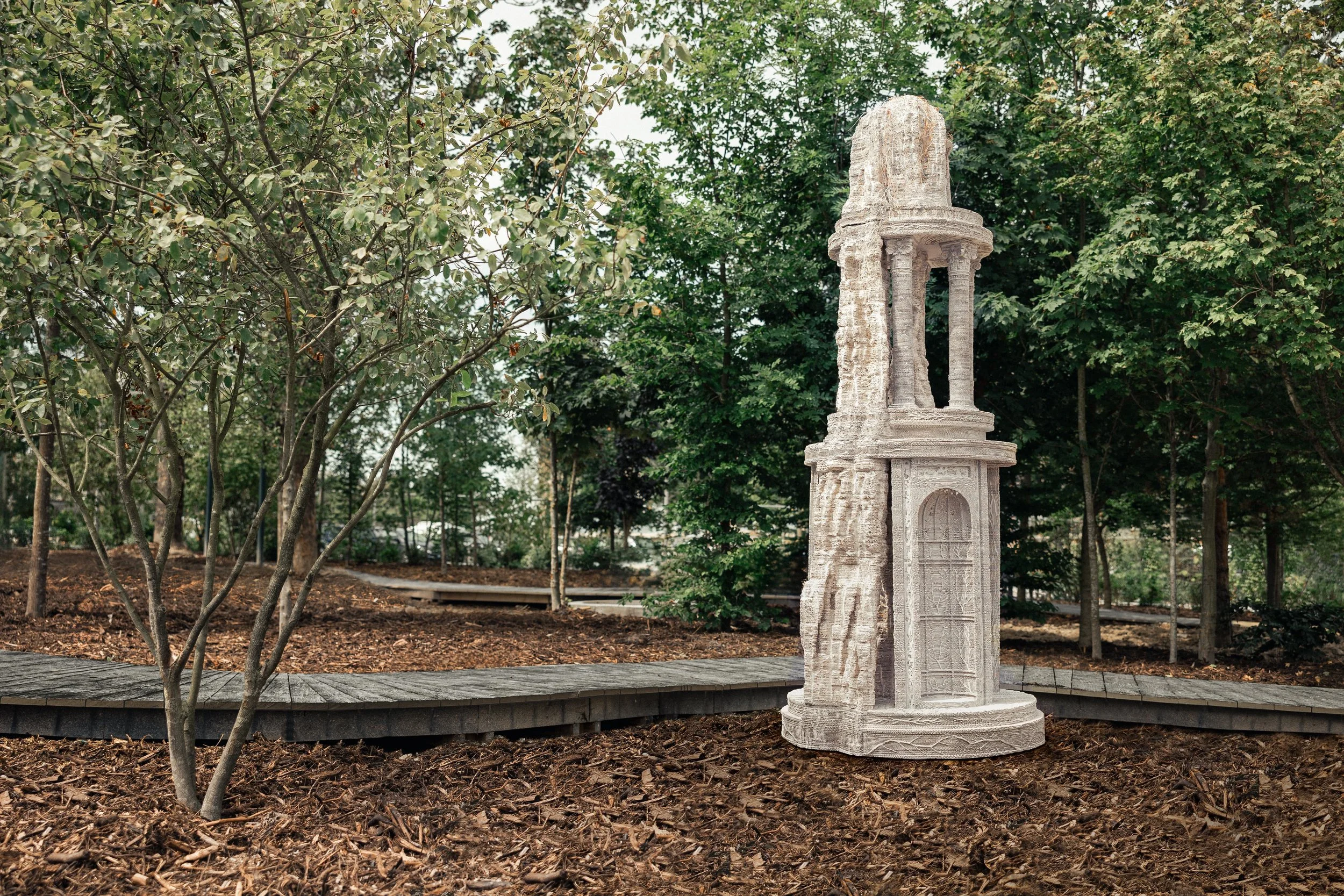
4 Rue de Crayères, CAPRICCIO by Eva Jospin. Photo and copyright: Mathieu Bonnevie. Image courtesy Ruinart.
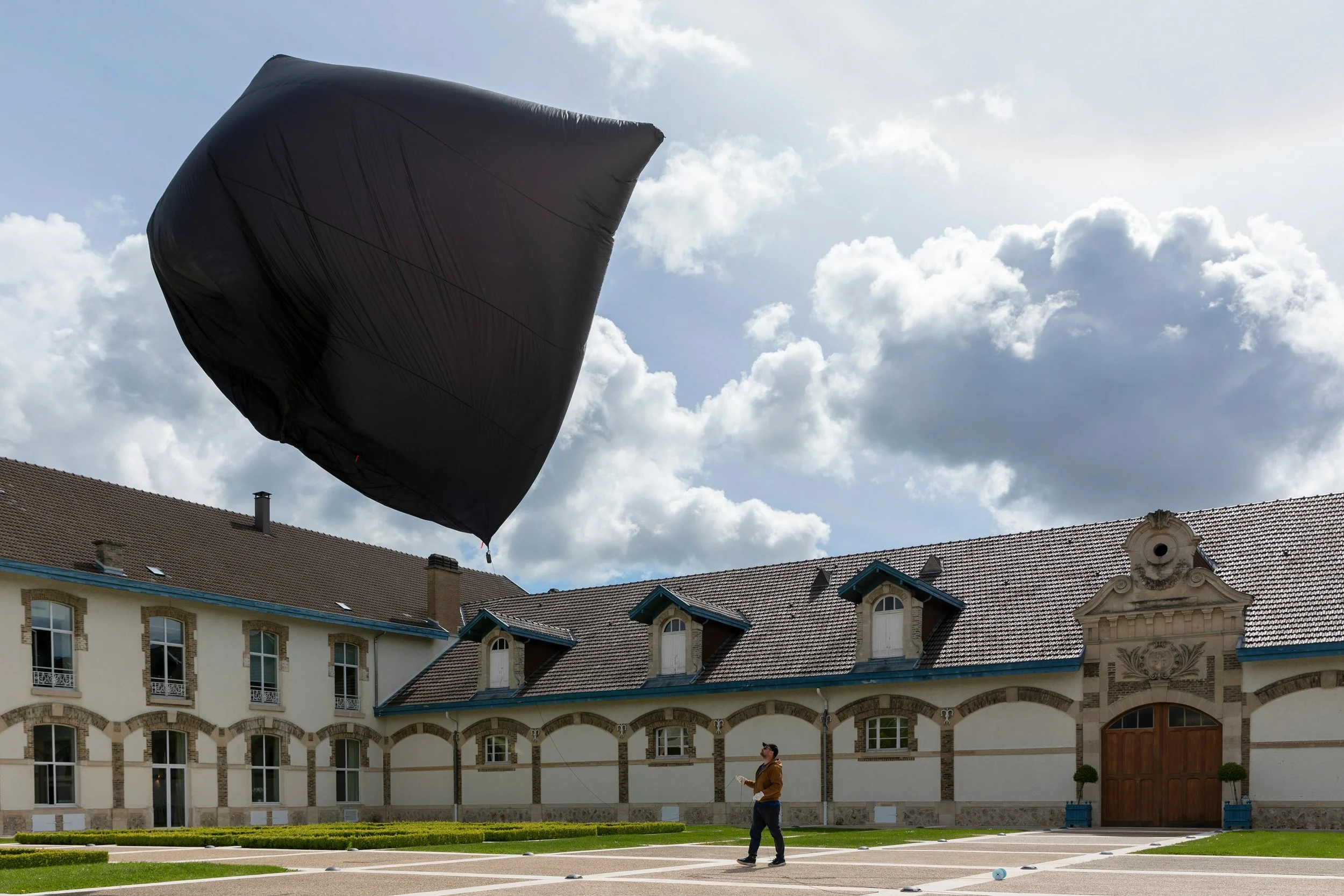
Tomas Saraceno: Aerocene at Maison Ruinart, 2021. Photo: Dario Lagana. Image courtesy Ruinart.
LŠ: Can you walk us through the artists’ commission process - the main criteria, vision, and impact? How do you see the artistic interventions in relation to the Maison’s grounds?
FV: We aim for a surprise. What makes our commission’s process different from other museums or foundations is the immersion - a visit to France, our gardens, to our vineyards and cellars. We want them to meet the people and really experience our area, the Champagne region. As they propose a project, we are open on location, from the courtyard, garden, or even the vineyard.
For commission, we focus on the strong connection between space, the artist, and the story of the project. We want to support how the artist was feeling, or what they wanted to say, or to raise as an issue. Here the artists’ residencies play an important part as the journey of discovery. We always try to select artists with different techniques, different materials. Some would use wood, others glass, metal or LED screens. We had wonderful works emerge from reclaimed wood.
There is a strong diversity of approaches, however they all connect in one way or another to nature, from biodiversity to soil.
LŠ: Through artistic interventions many layers of the Maison have been explored and transformed. With the newest additions being that by Julian Charrière’s Chorals within the cellars, activating sound and light. How have the sensory experiences by different artistic interventions changed the cellar’s identity? How does sound allow you to communicate that light or material cannot?
FV: As you know, our chalk cellars are UNESCO listed, as part of the UNESCO heritage. And it is our work to protect them. Yet, we still want to invite modernity into their spaces. As you enter the cellars there is a disconnect from time, weather. It could be nighttime, daytime, spring or winter. You enter another world. A world of chalk, and the idea was that artists could also go further and create special and immersive experiences.
We started projects with Vik Muniz, who created Flow Bottles, an interactive light installation in the cellars, and recently Julian Charrière, although at the start we were not aware that he would work with cellars, as he started with other proposals. However the geological structure (the microorganisms of shells and other animals) spoke to him and he changed his mind when he discovered our UNESCO-listed cellars. This soil is where our vines get their roots and the chalk is where the wine is aging. Charrière’s immersive sound installation titled Chorals is an evocation of ancient seas and the chalk as a seabed. The combination with the space of the cellar created a world of its own shaped by natural lights. There is a disconnect from reality, like a sea under ground with the sound of marine life.

CHORALS by Julian Charrière at 4 Rue de Crayères, ©ChloéLeReste. Image courtesy Ruinart.
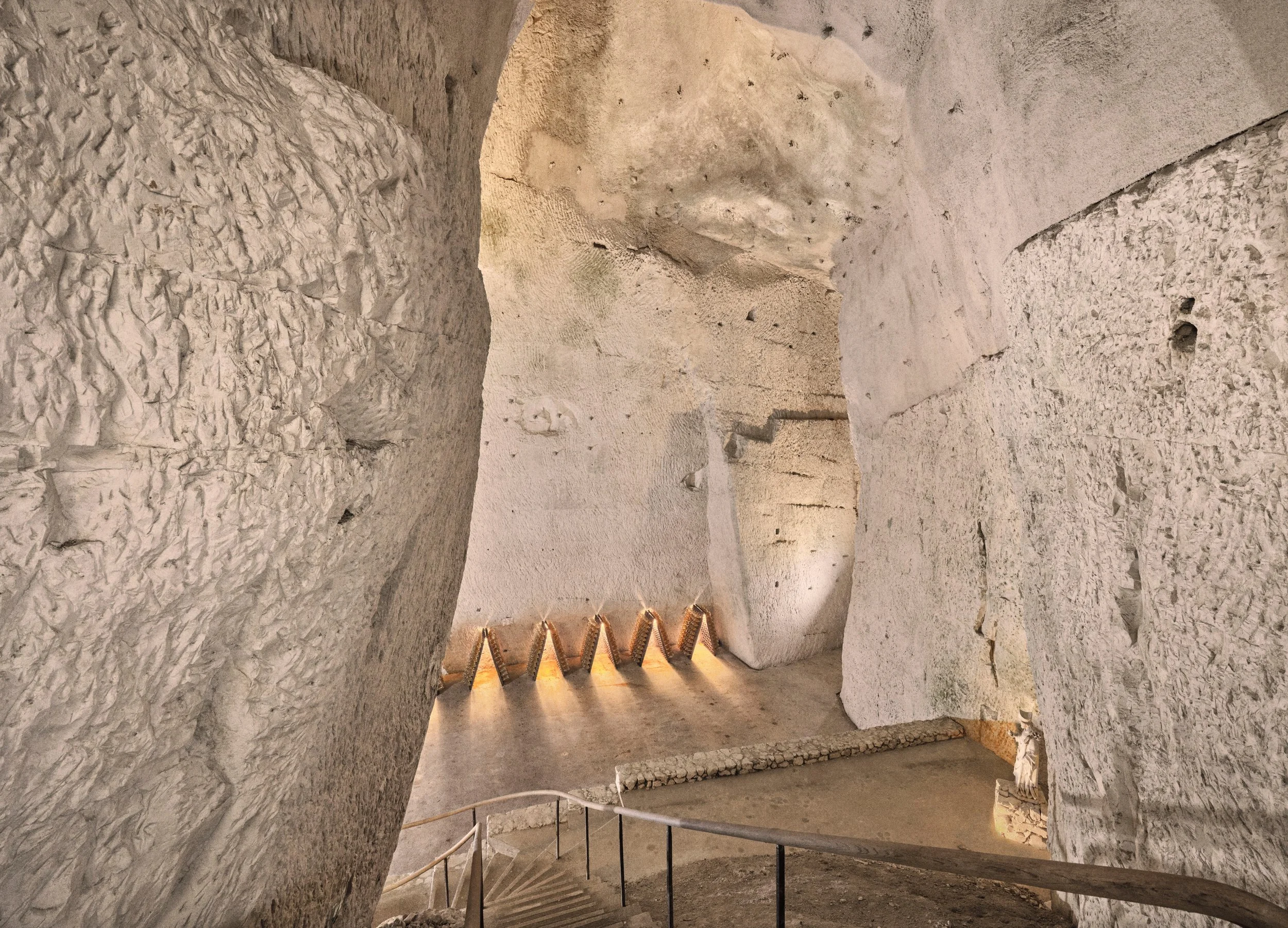
4 Rue de Crayères, Cellars. Photo and copyright: Gregoire Machavoine. Image courtesy Ruinart.
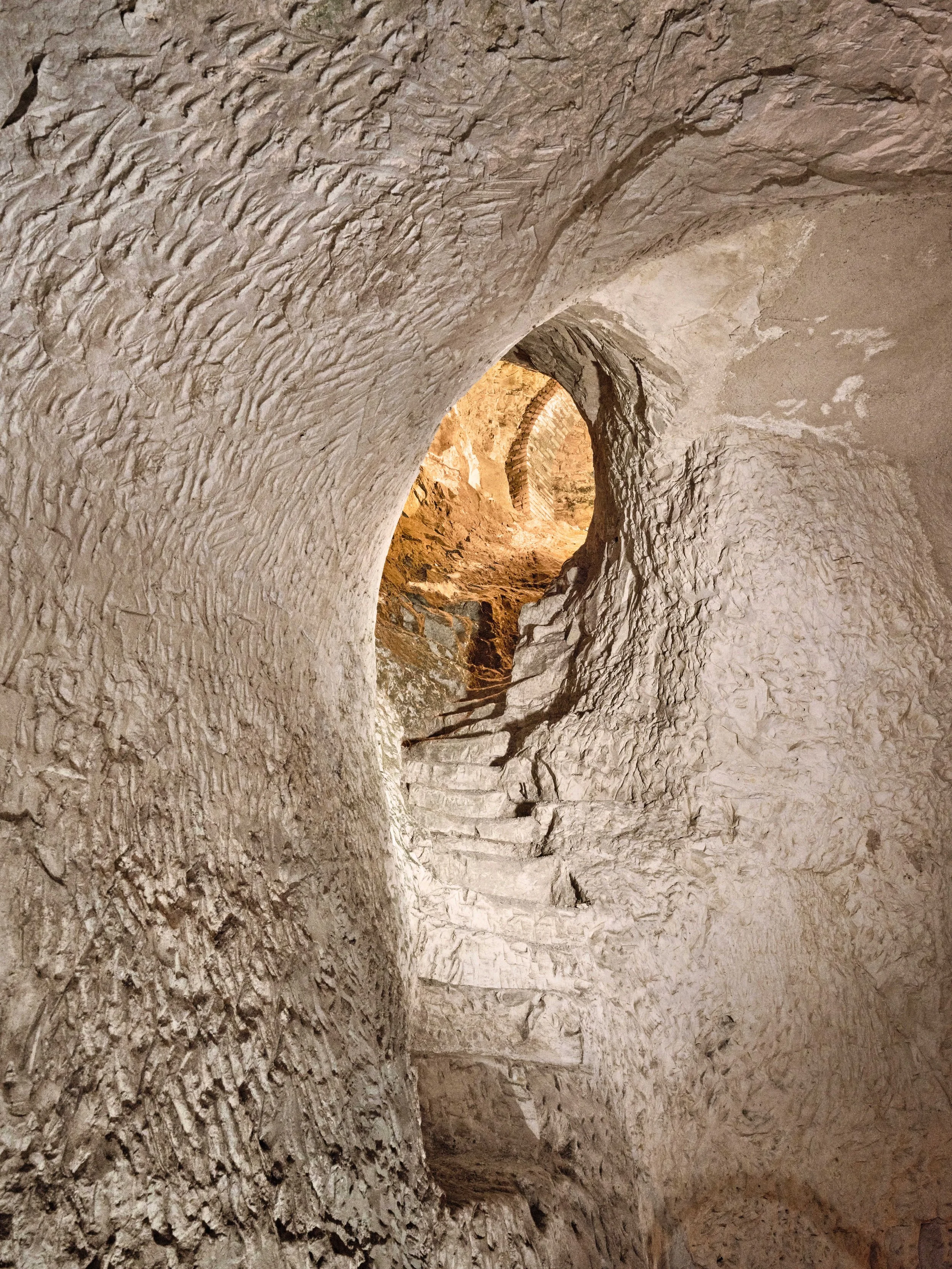
4 Rue de Crayères, Cellars. Photo and copyright: Gregoire Machavoine. Image courtesy Ruinart.
LŠ: The 4 Rue des Crayères exists “in conversation with nature and the vision of artists,” with plans for new performances and new installations. What are some of the plans for the coming years?
FV: We will unveil new commissions that can be sculptures but also performances in dialogue with the environment. The vision of Ruinart is to invite artists that have a meaningful approach but also a specific technique or know-how that makes them stand out to create emotions for a large audience.
LŠ: Recent international residencies such as Liu Bolin’s at Ritz-Carlton Maldives, and participation at art fairs like Frieze LA, Miami Art Basel or Arco in Madrid are extending the program beyond the local region. How do these global partnerships enrich the dialogue between art, nature, and Ruinart’s heritage? What are your next destinations or visions for expansion?
FV : The idea is that we call our project "Conversations with Nature", where we have several kinds of artistic invitations. We always start with a residency, artists spend time with us in the Champagne region to discover the many facets of history, nature and know-how. We want the artist to be inspired and to get the right materials, etc. Usually they come more than once, because there are also many changes depending on the seasons.
At Ruinart we are open to artists from every continent and every generation. We have specific local programs such as the Ruinart Japan Award, linked to the Kyotographie photography festival or the annual commission at Frieze LA. We’ve also already started to look with great interest at the Korean art scene and soon probably to the Latin American artists.
With our 300 years’ anniversary coming in 2029, there will be for sure surprising and meaningful projects to be imagined and revealed.
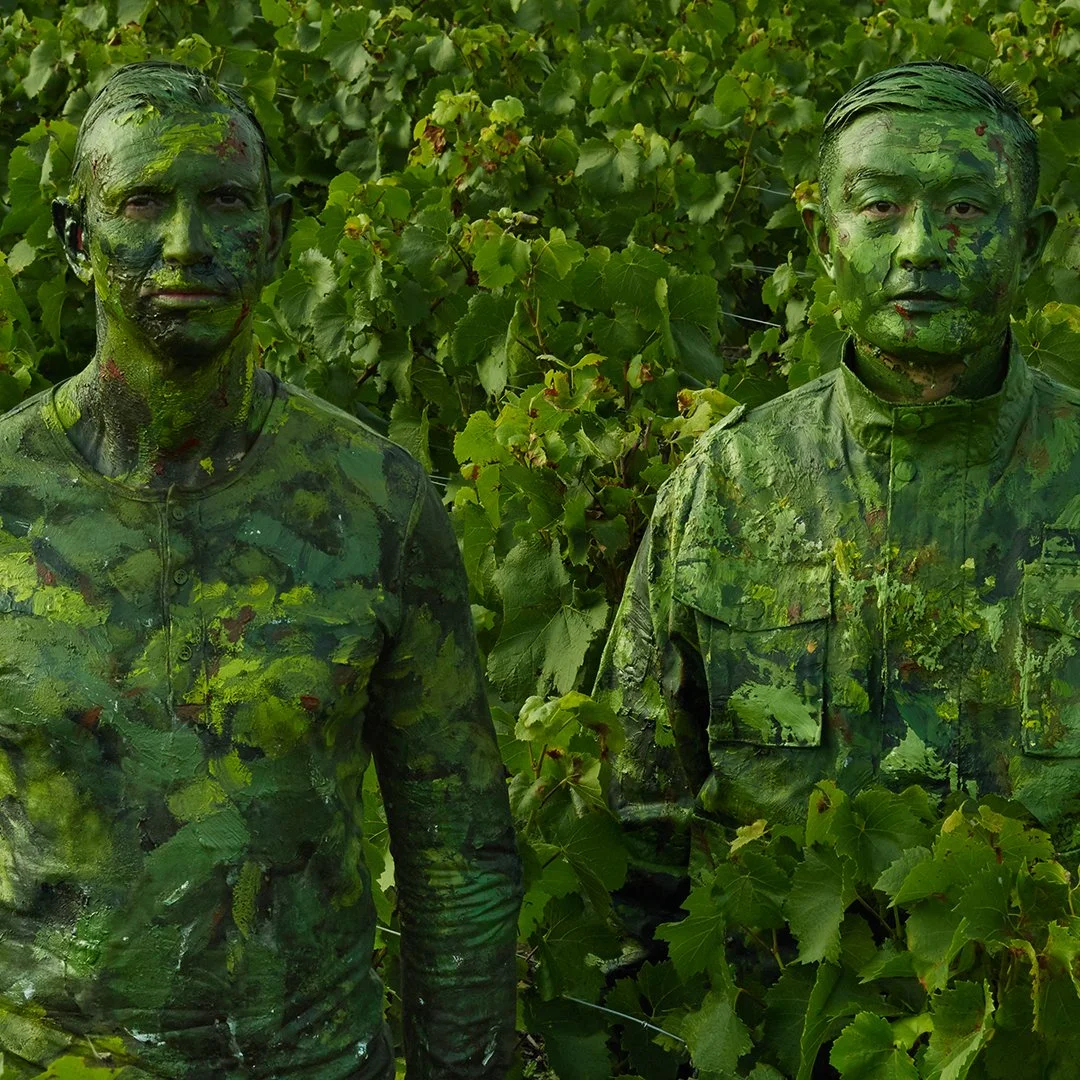
Liu Bolin, courtesy Ruinart.