Superflux
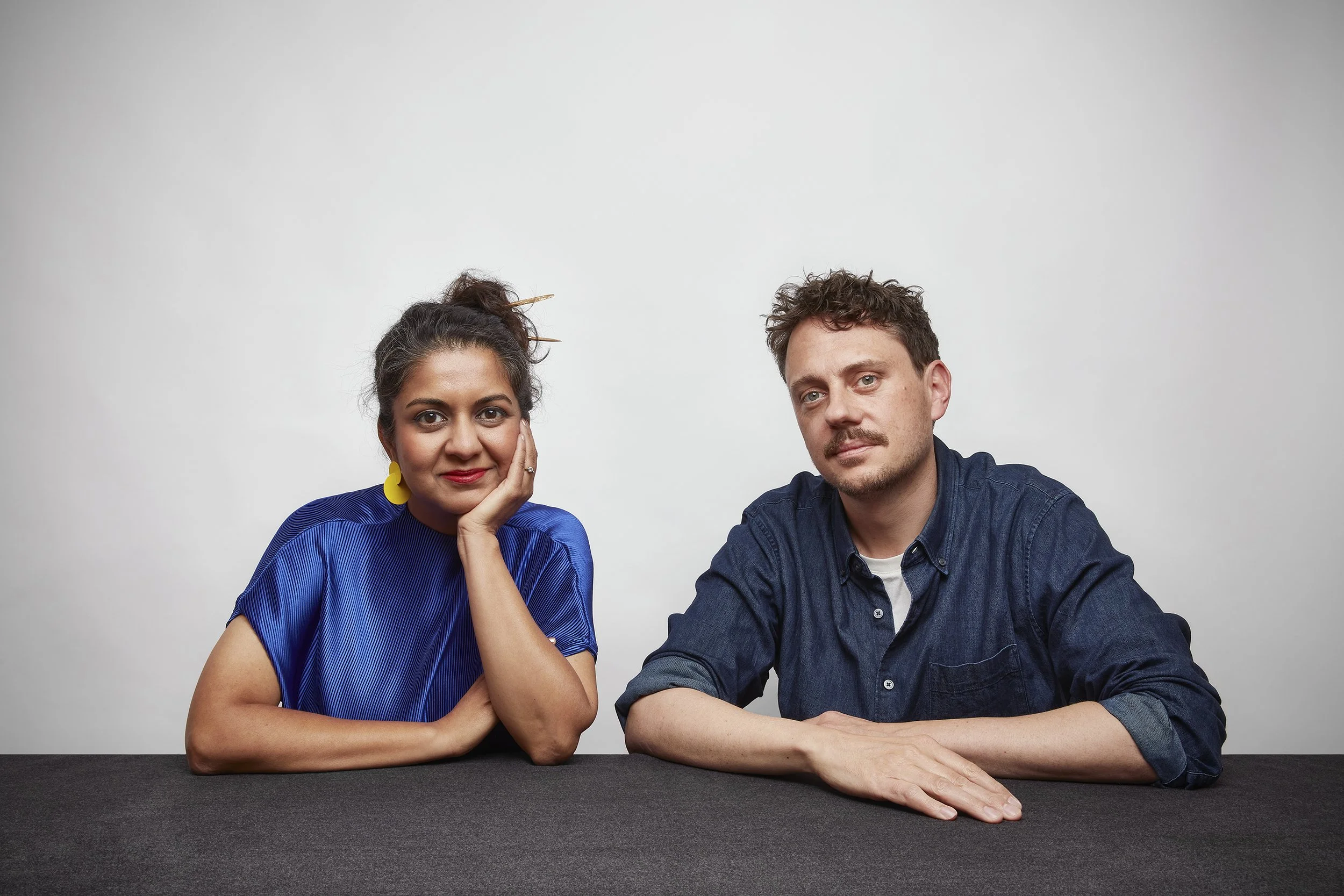
Superflux: Anab Jain and Jon Ardern. Photo: © Mark Cocksedge
Superflux
Founded by Anab Jain and Jon Ardern in 2009, Superflux is a boundary-defying, award-winning design and experiential futures company, as well as a research and art practice. From climate change to algorithmic autonomy, the future of work to more-than-human politics, Superflux's work aims to confront diverse audiences with the complex and deeply interconnected nature of the challenges we face today. Superflux invites clients, collaborators, communities and wider participants to remain open to multiple possibilities and navigate precarity with active hope.
Using design to imagine hypothetical worlds as a critical strategy for businesses whilst expanding public imagination was not prevalent thirteen years ago. In this space of possibility, Superflux willed itself into existence, becoming one of the first studios to pioneer the practices of speculative design, critical foresight, design fiction and experiential futures in business. The studio has produced impactful futures work for clients like Google AI, Cabinet Office UK, Gov. of UAE, IKEA, UNDP and DeepMind. Parsing uncertainties, weak signals and wide-ranging trends, Superflux works with clients to imagine and build future worlds they can experience in the present moment. Such visceral engagement with multiple possibilities opens up undiscovered opportunities and helps identify blind spots. More significantly, such imagination-led futures work enables strategic, informed and long term decision-making.
Superflux's prescient and innovative business practice is inextricably linked to its self-initiated experimental research and art lab – space where Anab Jain and Jon Ardern, with colleagues, test new ideas and themes, exhibited at institutions such as the National Museum of China, MoMA New York, V&A Museum, La Biennale di Venezia, MAK Vienna, Vitra Design Museum, Science Gallery, KUNSTHAUS Graz and more.
For the studio’s contribution to the fields of speculative and futures design with a committed social mission, Superflux received the Design Studio of the Year Award in 2021. And in 2022, both Anab and Jon were also awarded the RDI - Royal Designers for Industry Award in speculative design, the UK's highest accolade for design, recognising their impact on the field.
LUCIJA ŠUTEJ: From your background in filmmaking to studying Interaction Design at RCA, your work has continually evolved. While working at Nokia, you co-founded Superflux with Jon Ardern. How did this hybrid background shape the studio’s DNA?
ANAB JAIN: After graduating I worked at Microsoft Research and then briefly at Nokia, whilst Jon, (my partner and Superflux co-founder) was running a small web and tech company with two friends. This was around the time of the 2008 credit crisis. It was unsettling. We were still idealistic and wanting to make work that mattered, yet the world around us felt as if it was cracking in real time.
We felt that there was this prevailing idea that things had to be only this way—that there was no other possibility. We even drew this diagram of a "circle of possibilities" where there was a sense of consensus reality and established narratives around it. But we asked: What were the other strange things happening around the edges? What future possibilities could emerge? We were interested in creating a practice that bypassed these established narratives about the present and the future—narratives that created what we called a “hypnosis of normality.”
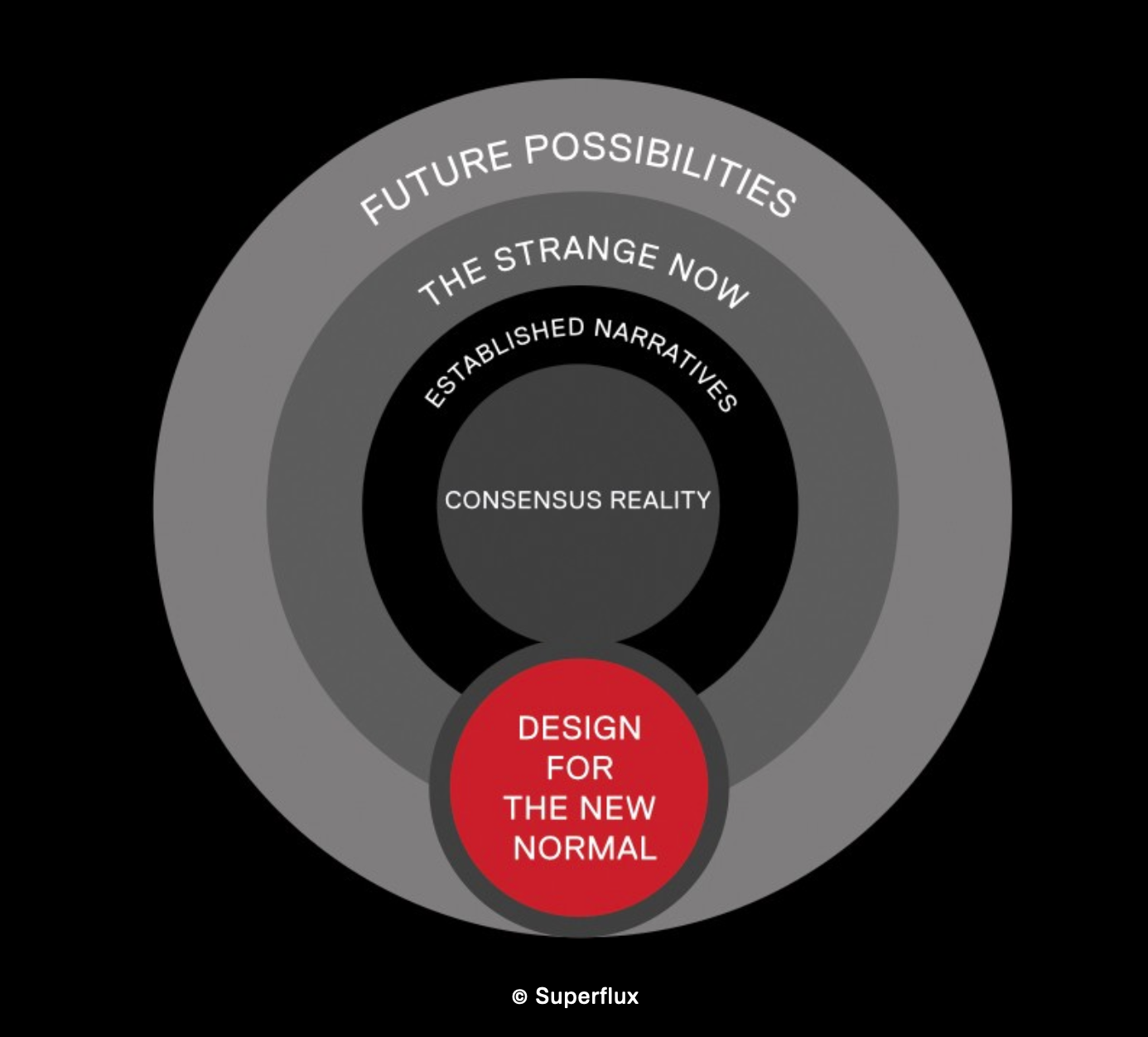
Courtesy: Superflux.
It had become so clear that this hypnosis was cracking and breaking. We wanted to create a practice that would bypass it to allow for an emotional connection with the raw weirdness of our time, opening up an array of possibilities. That concept, which we called "design for the new normal," was the diagram that sort of established the DNA of the studio.
LŠ: What insights from your time in tech companies most influenced your approach?
AJ: We both studied interaction design and therefore come from a very technology-oriented approach. We are interested in the potential of technology, but—as per the course that Tony Dunne and Fiona Raby used to run—we are interested in the implications of technology. That was the thinking we brought into our work with tech companies.
During the time we spent there, we recognised that whilst within the organization there is an appetite for exploring alternatives, the imperative is almost like an arms race towards the top. The drive to make the most profit, to "move fast and break things," to create products and services at an alarming pace was such an overpowering imperative that it really often came at the expense of other possibilities and the space for imagination.
LŠ: Some of your early clients like Google AI, UNDP, and the UAE government; focused on systemic challenges like carbon-zero policies. Exactly how did these collaborations shape Superflux’s direction?
AJ: They were interested in focusing on these systemic challenges, which was really what we were trying to do at Superflux. We wanted to explore ways in which you could poke holes at the world to unravel the complexities and understand the interconnected nature of the challenges we face.
For instance, when we were talking with the UAE government about investment in renewable energy, bringing it down to the fact that their children or grandchildren might inhale some of the worst and most polluted air—and literally bringing that sample of air into their space—was really profound and moving. Or when we were working with the UNDP to think about bringing AI into the mix and reducing their bureaucracy, that led them to start thinking of different internal initiatives.
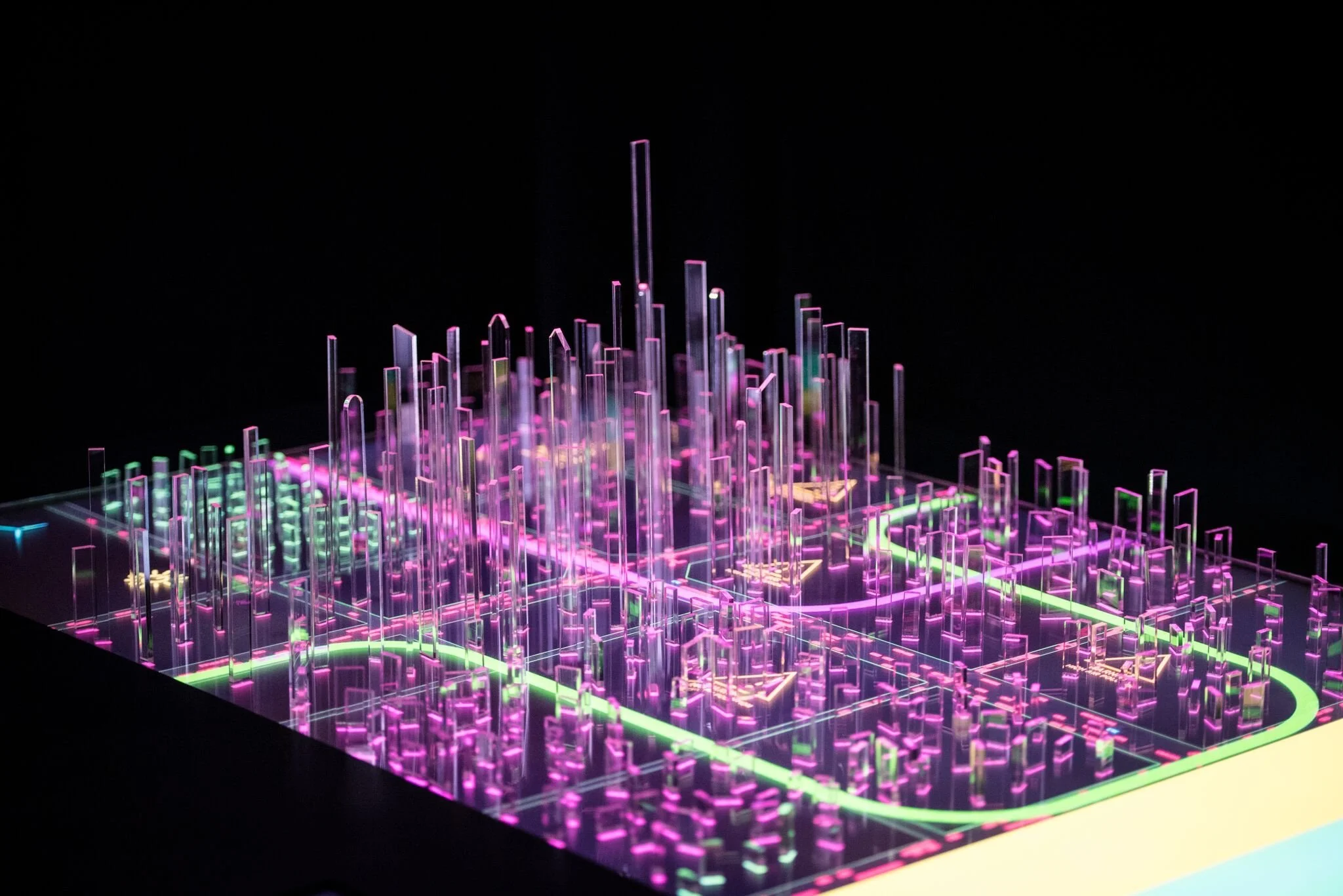
Future Energy, courtesy Superflux.
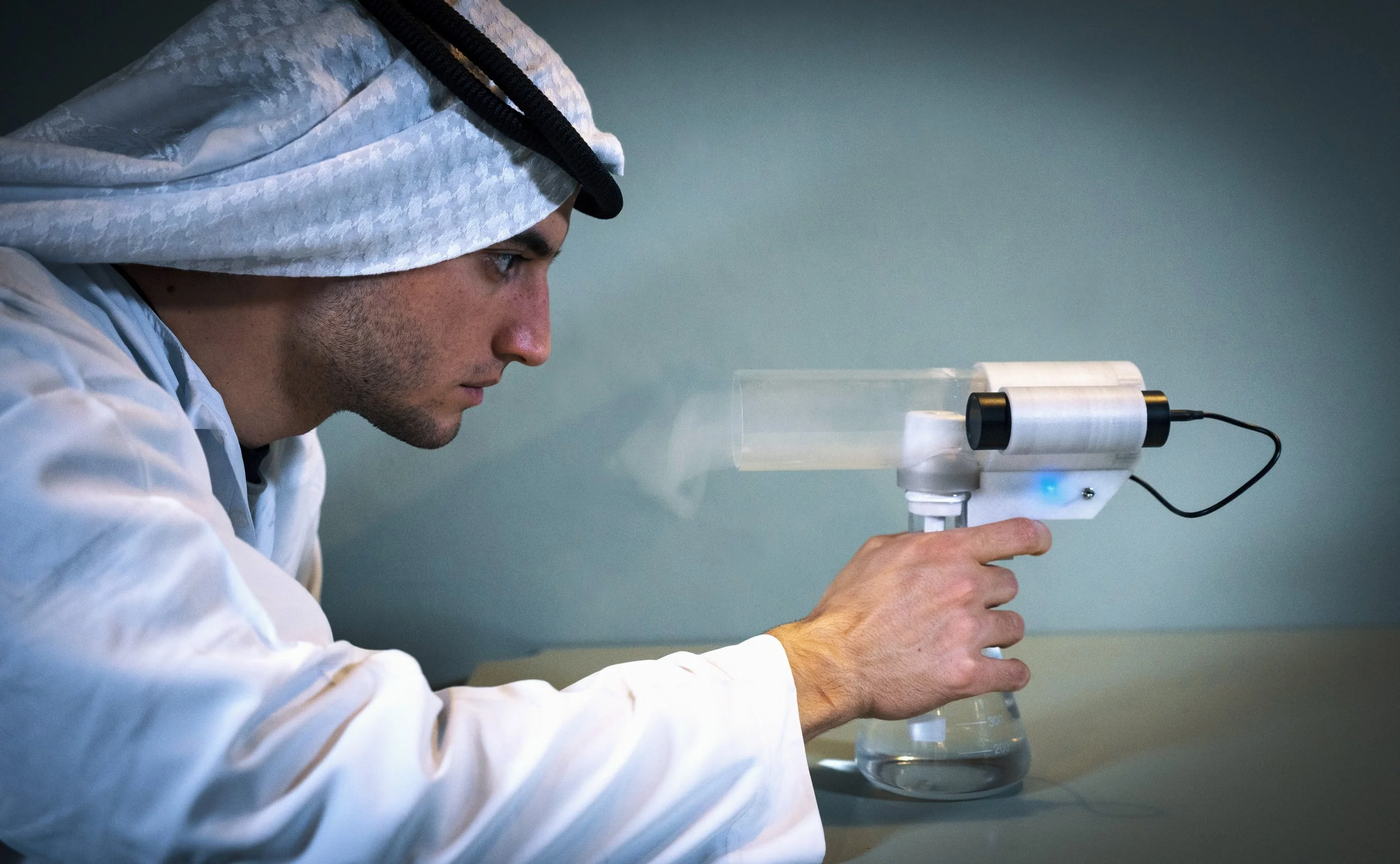
Future Energy, courtesy Superflux.
The idea is that we are not interested in responding to trends as much as understanding the interweaving connections. We are constantly involved in the work of sense-making the rapid change. We do that from a critical perspective—we call it "critical sense-making"—casting a wide net on the forces at play. Rather than creating categories of scenarios and quadrants, we are interested in charting threads of nested trends and signals relationally. These connect to us as people and humans, but also to landscapes through the lenses of bodies, tools, infrastructures, governance, and the planet.
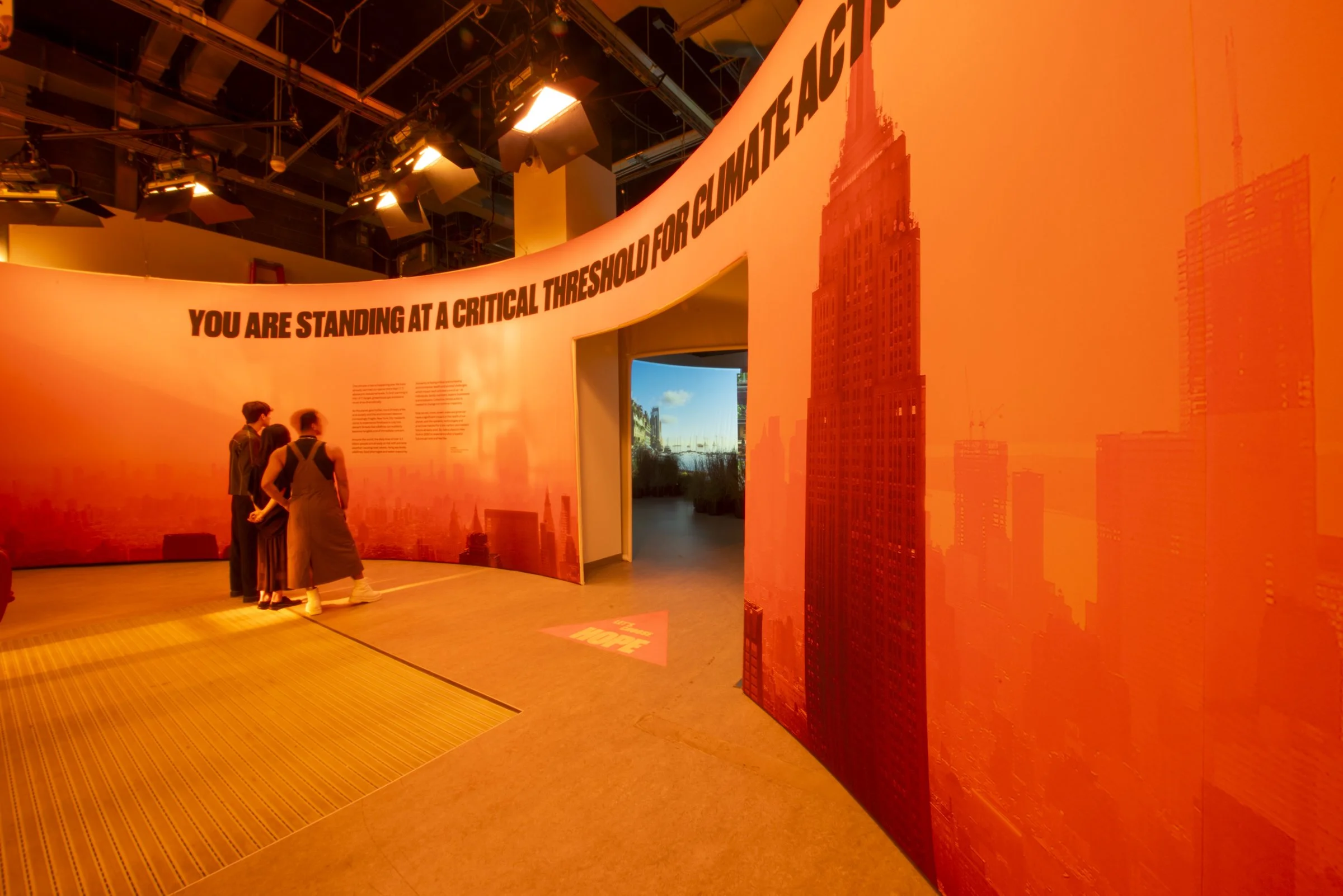
Action Speaks, courtesy Superflux. Credit: Isometric Studio.
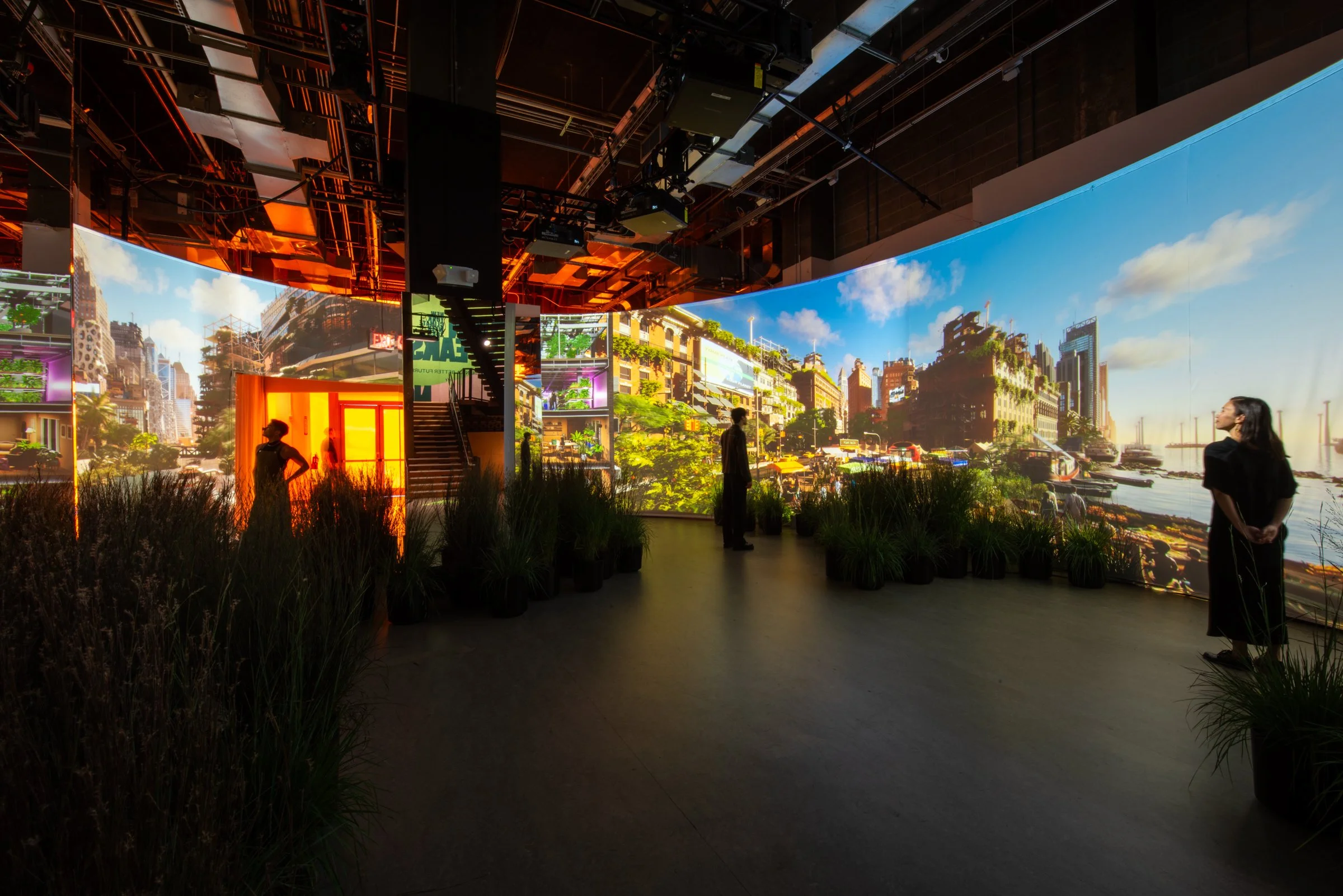
Action Speaks, courtesy Superflux. Credit: Isometric Studio.
You start to realize that a number of disconnected themes start to come into force together. We saw that with Covid; it wasn't just a healthcare issue, it soon became a social, mental health, economic, and cultural challenge. So this angle of critical sense-making is not just about identifying trends or following the mainstream narrative; it's about navigating complexity, exploring the grey areas, and drawing connections between seemingly unconnected ideas.
That work has shaped our direction because we use that method as a lens to interrogate how individual actions interact with broader social changes. It is a move from the question of "what" to "why." It's a way of engaging with the world that has allowed us to imagine other possibilities, other realities, and probable or improbable futures that are rich, complex, and full of potential.
Quiet Enchanting, courtesy Superflux.
Quiet Enchanting, courtesy Superflux.
LŠ: And now, with time’s perspective, which projects unexpectedly planted seeds for later work?
AJ: I think Jon's project that he did in 2006 at the Royal College of Art called Ark Inc. was a key seed. It was a tongue-in-cheek response—at that point, nearly 20 years ago, not many people were talking about climate change—and in a speculative and critical design context, he was talking about design solutions for a post-crash civilization. He was exploring the fragility of our current situation in regard to the fundamentals of environment and energy.
At the same time, my own project was Yellow Chair Stories, where I was engaging in public spaces with people in participatory and unexpected ways. I suppose both our interests came together in the project Mitigation of Shock, which was an apartment set around 2050 in a climate-altered reality. People were invited to step literally, physically, viscerally, and emotionally into a home that might at first glance appear to be a seemingly comfortable living space, but then you slowly start realizing it has been adapted—and adapted for a world it was never meant to exist in.
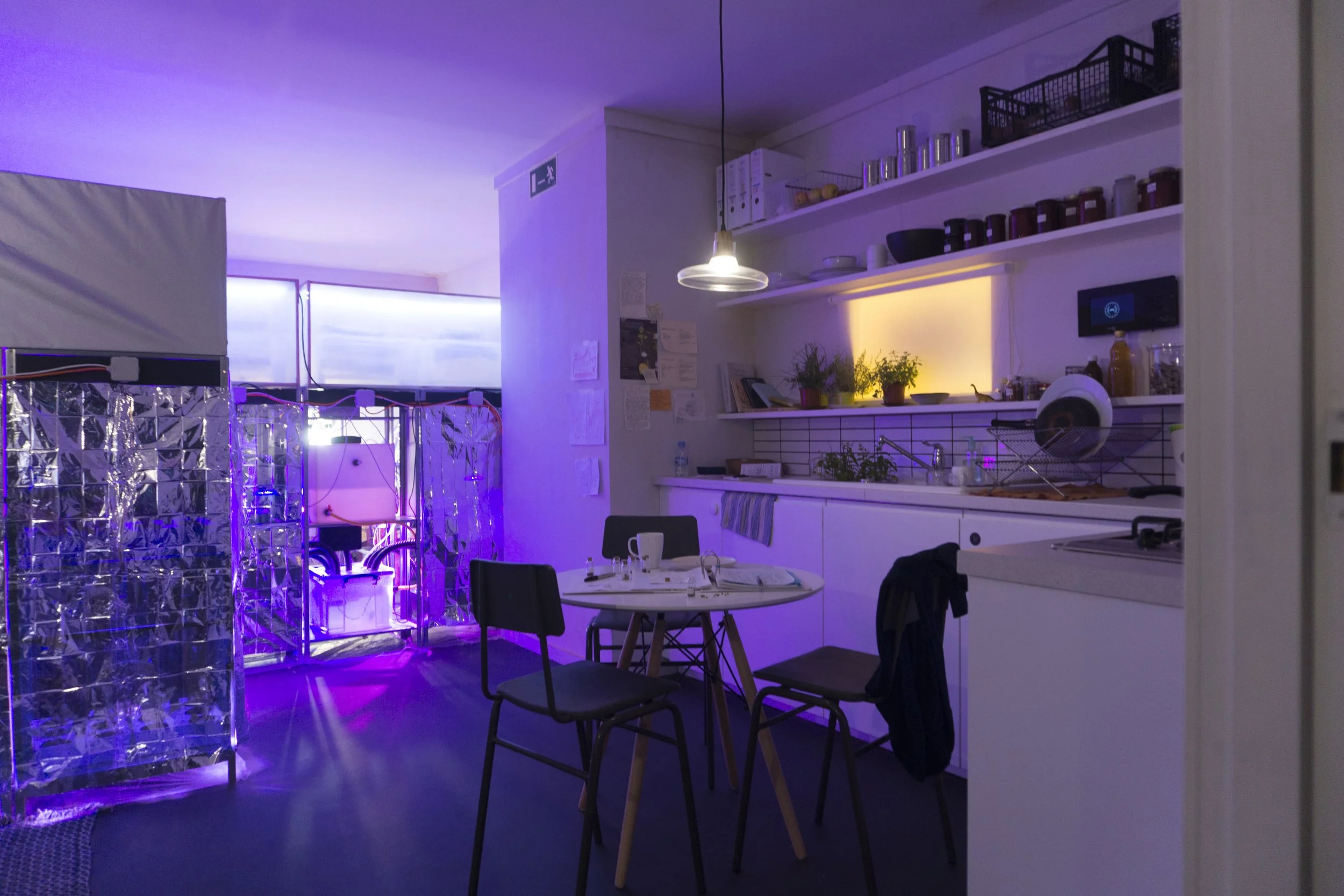
Mitigation of Shock, courtesy Superflux.
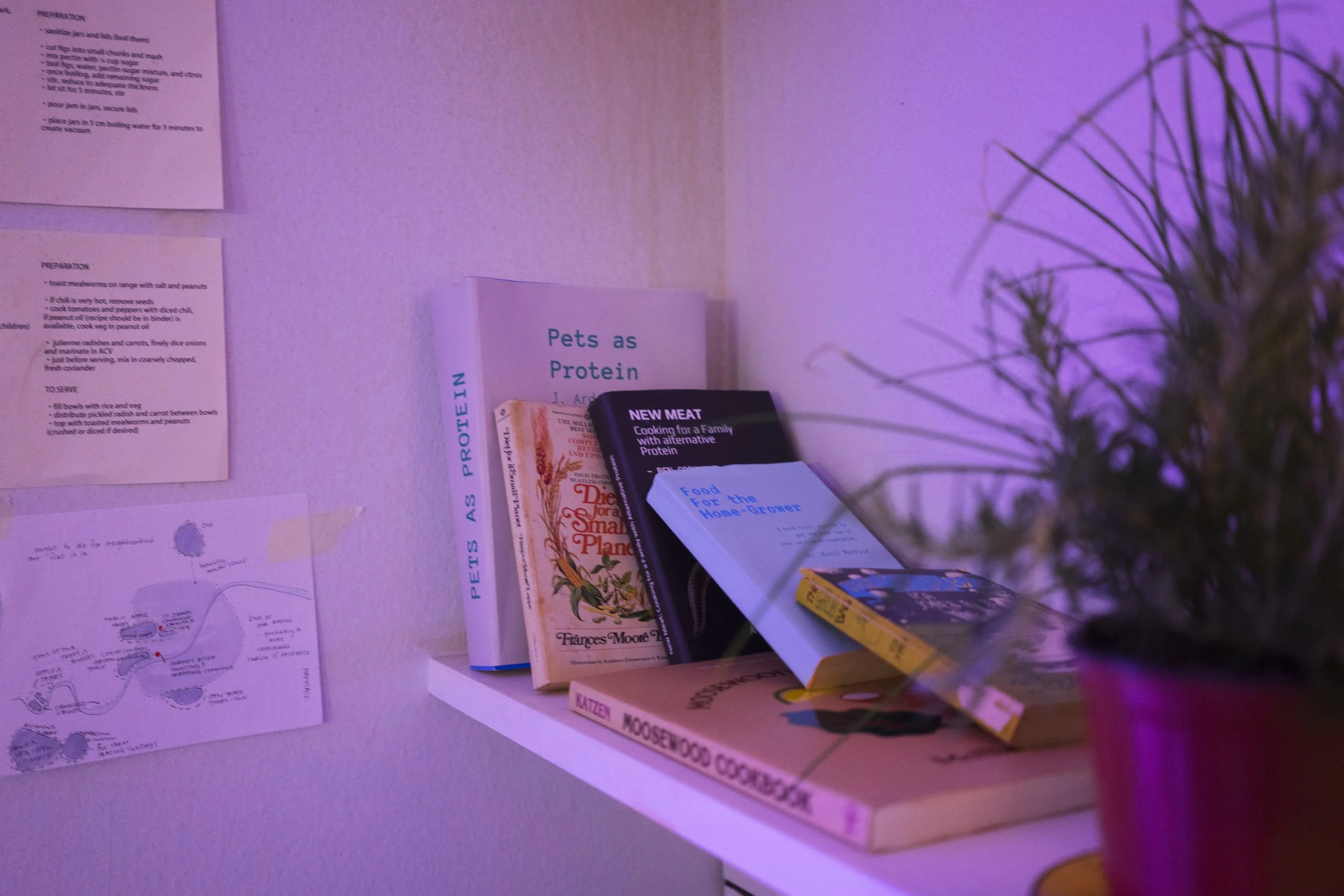
Mitigation of Shock, courtesy Superflux.
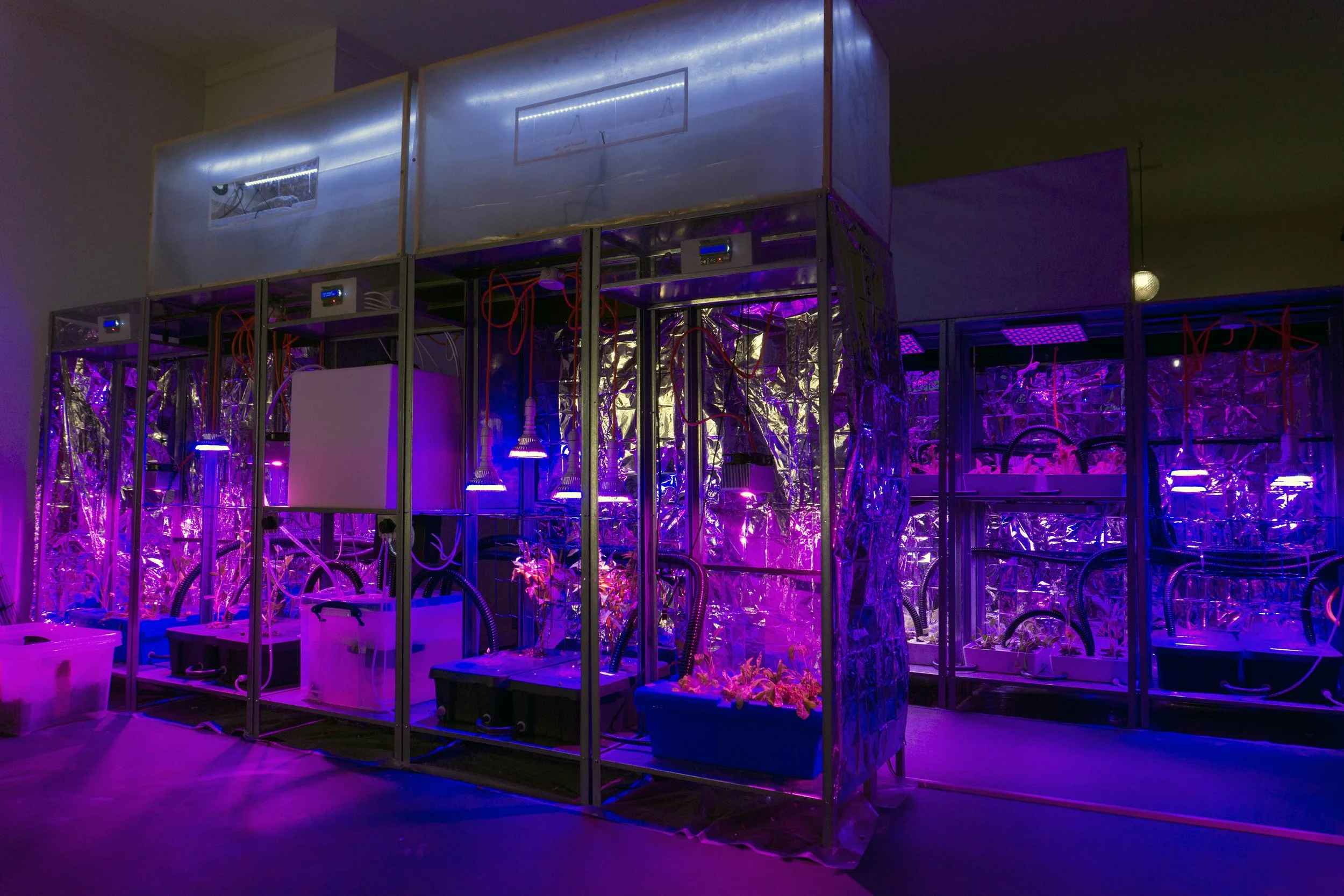
Mitigation of Shock, courtesy Superflux.
LŠ: In The Ecological Intelligence Agency, you reimagined AI to prioritize and highlight more-than-human perspectives. In your opinion: how can design disrupt dominant tech paradigms and even reshape policy-making?
AJ: I think the work we want to do around AI is connected to the limits of AI that the work has exposed. Quite often, the crisis surrounding AI is not necessarily technological, but—as I was saying earlier about this arms race—it lies in this imperative that pushes technologies towards a very narrow maximum profit, maximum productivity, best tools, and highest share prices. What that does is lead to a crisis of possibility.
There is an acceleration of the development of systems built on a potentially singular or very narrow idea. Even though the idea is to create "super-intelligence," the definition for what that intelligence is is often defined by the market.
LŠ: What limitations of AI has your work exposed? In projects like Mitigation of Shock (with its edible mushrooms presented in a climate-altered future dwelling in London as a specific study case), what systems of knowledge are most often missing from discussions about human/non-human interactions?
AJ: In that market-driven process, older, embodied, and ecological forms of knowing remain unrecognized and undervalued. What we are trying to do with the Ecological Intelligence Agency is to say that there is another possibility. It is not so much saying, "Oh look, now we have created AI that works differently"—although we are trying to build it technically as a prototype—the value in this lies in the creation of a situated, material, embodied speculation that people can viscerally experience. That can move them. That can show them that technology can play a different role—it can actually bring me closer to things I might not recognize.
Eventually, we would like maybe the technology not to be there at all, for us to be able to truly, deeply re-attune ourselves to the rivers, to the forests, to the mountains, to the landscapes around us. In a way, the question is: what even is the point of having AI?
That actually takes us to the point: Why are we rushing? What are we moving towards? What do we expect AI to be able to do with us? What does a sense of purpose and value even mean? That is the discussion we are missing. There is a chance for reimagining alternatives. There is a chance to move past the desire for technology to collapse into something very singular, but to think about it as we might of ecology. The idea of ecology is really, deeply the idea of us being one amongst every other being on this planet, and therefore we have to tread lightly on how and what we put out into the world.
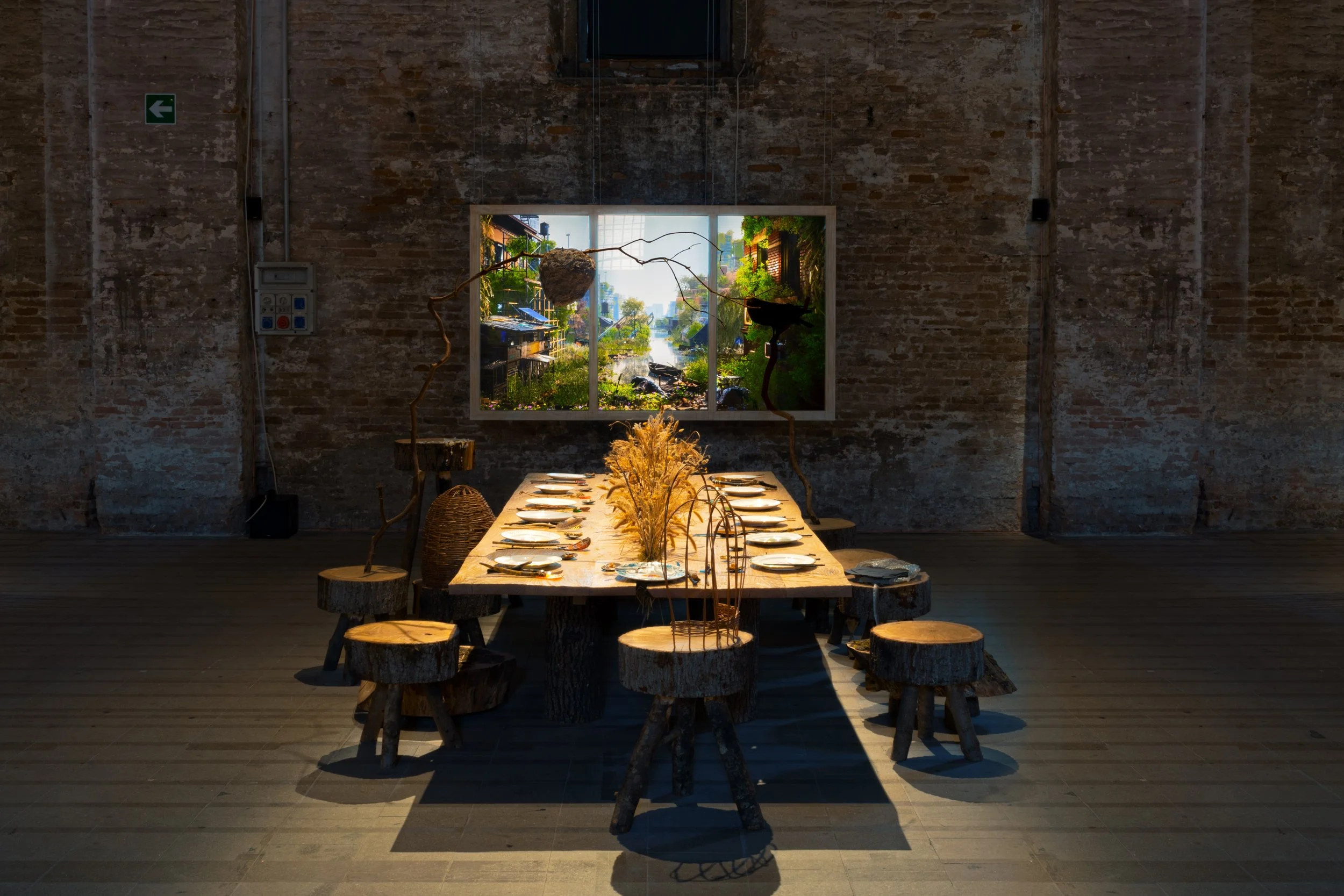
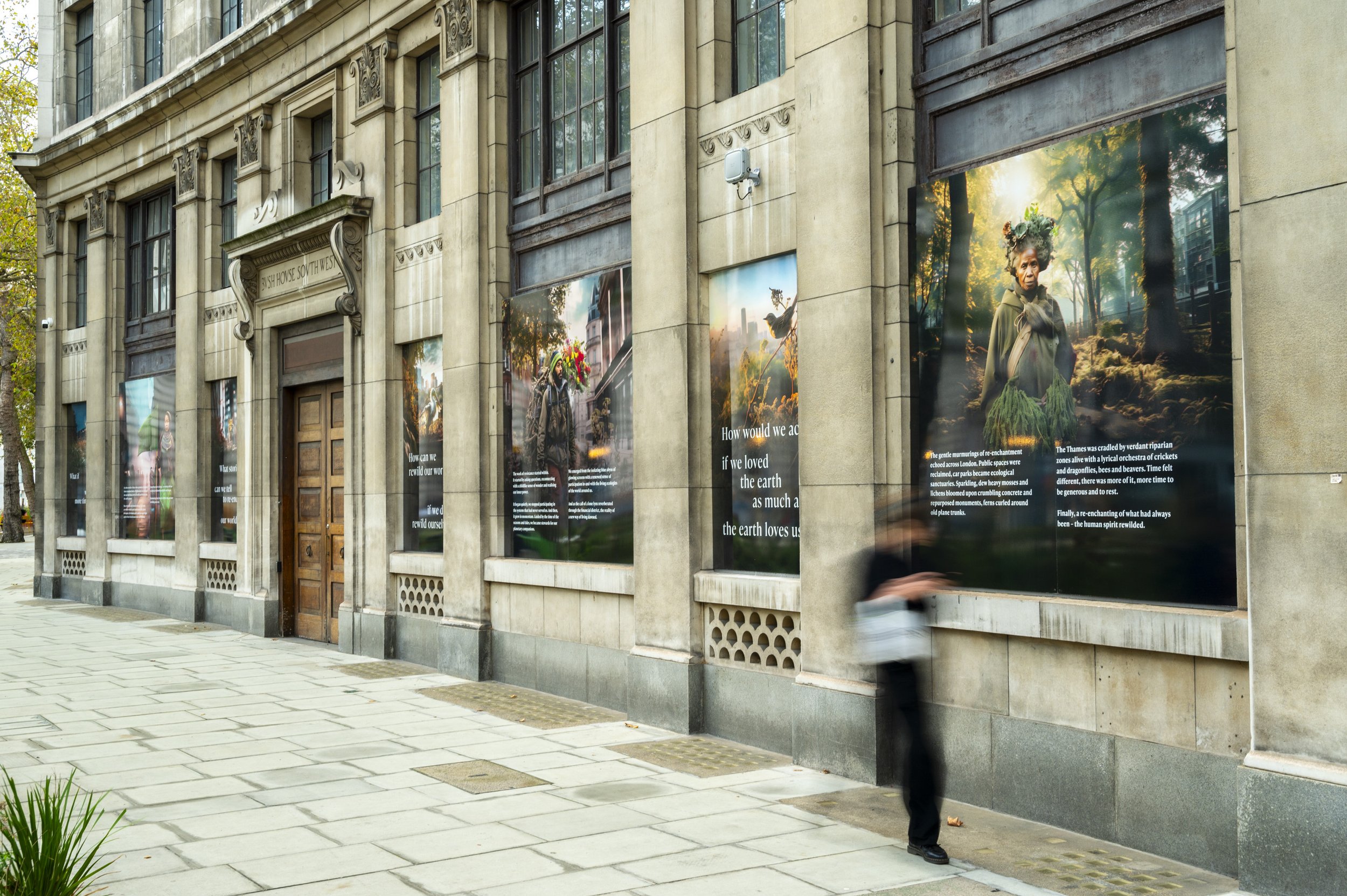
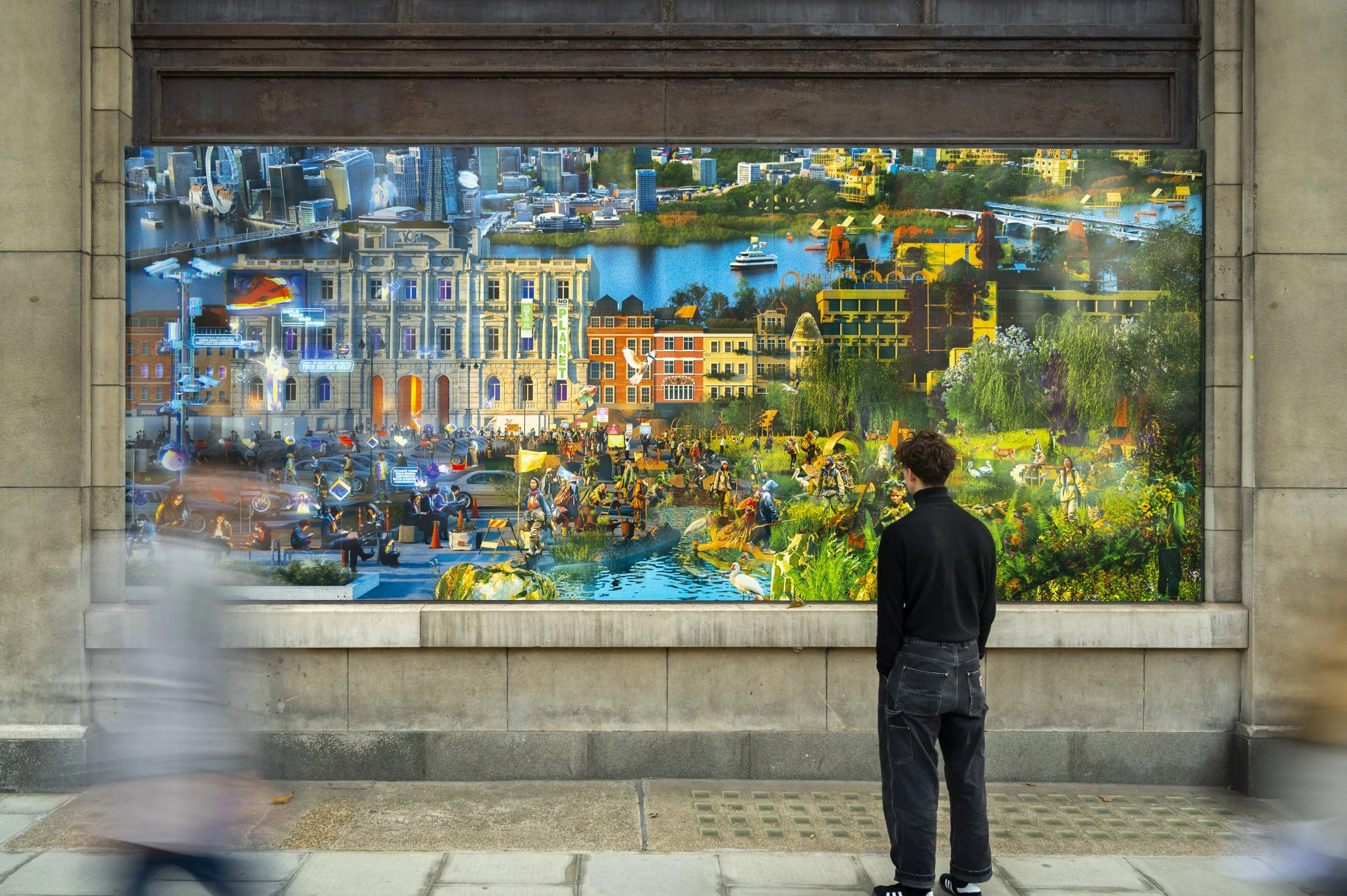
Refuge for Resurgence, courtesy Superflux. Photo credit: Giorgio Lazzaro
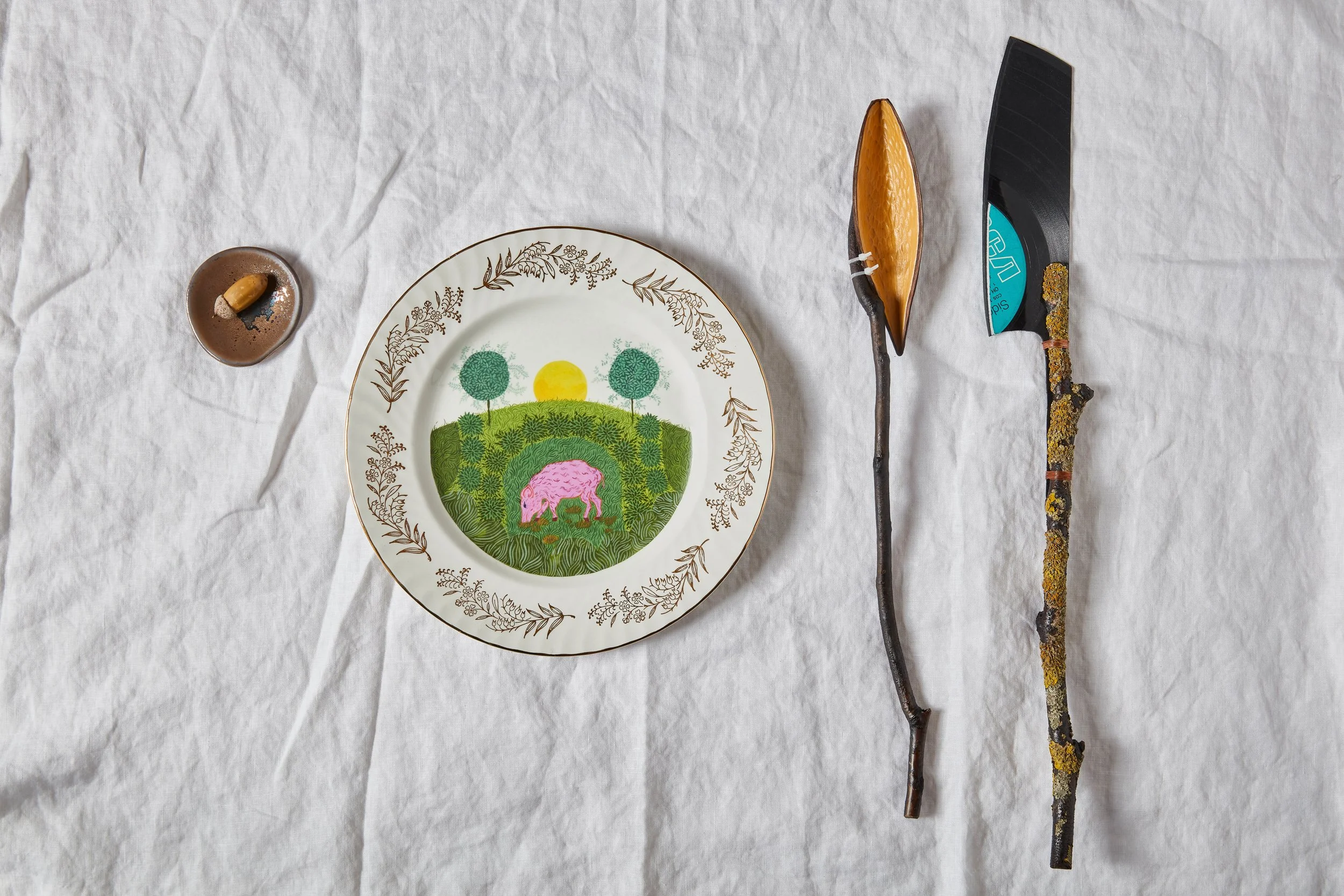
Refuge for Resurgence, courtesy Superflux. Photo credit: Mark Cocksedge.
LŠ: What lessons from your work would you like to present to the future of design education? Which undervalued skills will be critical for future designers?
AJ: That's a really good question. I am now entering the tenth year of my role as Professor of Design Investigations at the Angewandte, and that has taught me so much about the value design education can bring. I'm really excited to share that I have co-authored a book with my two colleagues titled Designing Questions, about what our vision for the future of education could be, drawing on our learning from our own department.
LŠ: Superflux as a studio actively invites and thrives on collaboration, from communities to zoos (Invocation for Hope, MAK Vienna). Which partnership most radically shifted a project’s trajectory? What surprised you, and why?
AJ: Regarding which partnerships most radically shifted us... One is the people we've worked with. Whether they are our team members or collaborators on projects, they bring a huge amount of integrity, talent, and perspective. Every partnership has truly been rewarding.
The other partnership is like the zoos in Invocation for Hope, where we put these GoPros in buckets of water so we could get videos of animals while they were drinking. Learning that they are not ready to listen to us—the ferrets ran away with the GoPros, the lynx simply kicked over the bucket of water... that was very valuable. Partnerships with the fungi whom we were trying to grow in the studio in many different conditions taught us so much about how and where human disturbance within an ecosystem actually could have value, and when we need to hold back.
I'm also thinking of a partnership with Kirsten Dunlop, who is CEO of Climate-KIC now, but at one point had the vision to commission Mitigation of Shock. Or the partnership with Claudia Banz at the Welt Museum in Vienna, who really saw the value in our work and has commissioned a solo show that opened in early March 2026, which we are very excited about. On the other hand, our partnership with the Ingka Group, where we helped conceive the idea of "Action Speaks" and run it, build exhibitions, visions, and create this collective movement across the last five years has been deeply rewarding.
And of course, my own community's collaborators and landscapes from India, specifically Ahmedabad and Gujarat, and Jon's own upbringing and landscapes of the temperate rainforests in and around Lancaster. These ecologies have all been really valuable.
LŠ: You often use history as a foundation for futures. How do you navigate its biases? What methodologies help you critically engage with the past without replicating its exclusions?
AJ:There is no perfect way to avoid replicating the biases of history. I try to hold an awareness of my own partial perspective and remain open to being unsettled by what I have overlooked. The real work is in staying with those gaps long enough to ask different questions. What else has been forgotten? Who else needs to be invited in? And what other stories might become possible if we allow them to enter?”